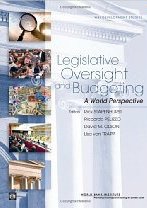
The Distribution of Oversight Tools and ImplicationsThe book begins with an inventory of oversight tools and powers and their distribution across different political systems. Chapter 1 presents data on oversight tools collected from a survey of 83 countries by the Inter-Parliamentary Union. The analysis reveals that legislatures in parliamentary systems are generally better equipped to oversee government activities than are legislatures in presidential and semi-presidential systems. In the budget process of presidential systems, legislatures are generally the most active in the preparation of the budget, whereas legislatures in parliamentary systems are the most active in approving the budget. However, the tools alone cannot predict a legislature’s oversight effectiveness. Chapter 2 argues that a parliament’s oversight potential, measured by the number of oversight tools available to a parliament, affects the probability that that country is formally democratic or a liberal democracy. It is found that the only oversight tool that is strongly and significantly related to a country’s liberal-democratic status is the institutionalization of the ombudsman function.
Oversight and the Budget Process
The budget process provides critical opportunities for legislative oversight. Part two (chapters 3 through 10) examines budget oversight from the formulation and approval of the budget to the implementation and the ex-post examination of the public accounts. Chapter 3 describes legislatures’ different roles in financial oversight and considers some of the lessons emerging from a decade of legislative development and reform. Chapter 4 demonstrates how the nature and role of budgets has a number of practical implications for those charged with exercising budgetary oversight. Chapter 5 constructs an index using data for 36 countries from a 2003 survey of budgeting procedures. The index captures six institutional prerequisites for legislative control, relating to amendment powers, reversionary budgets, the executive’s flexibility during implementation, the timing of the budget, legislative committees, and budgetary information. The results reveal substantial variation in the level of legislatures’ financial scrutiny of government among contemporary liberal democracies. Drawing on information from the World Bank–Organization for Economic Co-operation and Development (OECD) budget procedures database and data from the Center for Budget and Policy Priorities’ International Budget Project Open Budget Survey, Chapter 6 examines legislatures’ roles at the drafting stage of the budget and identifies factors that influence different degrees of legislative involvement. The chapter also highlights some good practices for optimizing the role of the legislature in this phase to improve fiscal discipline, strategic allocation of resources, and operational efficiency. Chapter 7 describes what happens if no budget is passed before the fiscal year begins and outlines the potential costs of failing to reach agreement. Data for OECD and non-OECD countries are compared, as well as parliamentary and presidential systems of government.
Specialized committees have emerged as fundamental tools for oversight of the budget process and spending of public monies. In many parliaments, the Public Accounts Committee (PAC) serves as the audit committee of parliament, making it a core institution of public financial accountability. PACs tend to be found in Westminster-model parliaments, although several other parliaments have adopted PACs. Chapter 8 looks more closely at the specific oversight tool of PACs in national and subnational parliaments throughout the Commonwealth. The authors examine how PACs can contribute to effective oversight of government accounts and the conditions that promote a PAC’s good functioning and success. Effective oversight committees are most often those with supportive staff. Legislatures and their committees are often assisted in their oversight function by extra-parliamentary accountability institutions, such as supreme audit institutions and ombudsmen. Parliamentary budget offices may also provide independent expertise and support to parliament. Chapter 9 discusses the potential value of such independent analytical budget units in putting the legislature on a more equal footing with the executive and in increasing the overall transparency, credibility, and accountability of the budget process. It is found that such units must be nonpartisan, independent, and objective to successfully fulfill their core functions. Chapter 10 examines the differences and similarities between six established and two planned budget offices. It is postulated that several more budget offices will appear over the next decade (in this context, see blog posting of July 21, 2008 http://blog-pfm.imf.org/pfmblog/2008/07/canada-creates.html on the establishment of a parliamentary budget officer in Canada). Later in the book, there is an in-depth study of the Uganda Parliamentary Budget Office (PBO) and the new budget committee in Uganda’s Parliament.
A Study of Countries’ Experiences
In part three of the book, attention turns to how oversight operates in specific countries. Chapters 11 through 22 present case studies that examine legislative oversight in regions and countries around the world, including in Brazil, the Czech Republic, Indonesia, Israel, Italy, Poland, the Russian Federation, South Africa, the United Kingdom, and parliaments in Latin America.
The book illustrates the difficulties in developing a limited and workable definition of legislative oversight. Moreover, while the policy implications of oversight are potentially important and deserve more research than reported in this book, the policy consequences of oversight need to be clearly distinguished from the oversight function. The case studies demonstrate the different means that legislatures have at their disposal for oversight, but also the different ways legislatures use these means. A variety of external and internal factors come into play, which may constrain or enable a given legislature’s oversight capacity. In thinking about a given legislature’s oversight function, it is important to examine time, societal context, and executive branches as both enabling and limiting oversight.
This book provides a rich resource for those interested into delving into conceptual and practical issues, as well as country experiences, associated with the role of the legislature in budget processes.